The increasing demand for customized products and the need for a quick transition from prototype
to production are driving manufacturers to streamline their processes. Katja Pirnat from Slovenian
screen printing machinery manufacturer INO explains how automation not only boosts efficiency
but also offers more sustainable and cost-effective solutions.
Challenges in Screen Printing
Traditional screen printing faces long setup times, which affect efficiency, especially in small-batch
production. High setup times with each screen change lead to long periods of idle time, extending
the total time required to complete a batch and increasing production costs. This issue becomes
more pronounced in small-batch runs, where frequent setups within short timeframes exacerbate
the problem. As a result, low-volume production becomes cost-prohibitive and less competitive.
The Impact of Automation
Innovative automation is transforming screen printing, a traditionally simple process, into a
competitive and efficiency-driven solution for the printed electronics industry. One key innovation is
the automatic screen positioning system, which uses servo motors to quickly and precisely set
screens, storing repeatable positions. The operator initiates the process with the press of a button,
reducing human error and significantly shortening setup times.
The fully automated system reduces screen change time by a factor of five compared to conventional methods, significantly lowering material waste and energy consumption during setup. Reducing waste and energy usage contributes to a more sustainable production process and lower production costs.
The fully automated system reduces screen change time by a factor of five compared to conventional methods, significantly lowering material waste and energy consumption during setup. Reducing waste and energy usage contributes to a more sustainable production process and lower production costs.
Case Study: Changeover Speed as a Critical Factor
An analysis of the membrane keyboard printing process, still one of the most common industrial
products involving printed circuits, reveals the critical role of screen setup automation in reducing
overall print time. The process involves printing both the conductive and graphic layers, requiring
four separate passes.
We tracked the print time for a batch of 20 production cases using INO’s fully automatic screen positioning system on the A7 line and compared it with the setup time on other equipment. Although print press speed seems to be the decisive factor for shortening print time, a closer look reveals that changeover speed plays a more significant role.
Even with just four screen changes, the impact of changeover speed on the total print time becomes apparent. As the number of prints and batch size increase, the time savings become even more pronounced. The automatic setup completes this crucial phase in less than two minutes, compared to an average of ten minutes or more for other setup methods. This reduction in setup time improves overall utilization during the printing process, minimizes idle time, and maximizes production output.
We tracked the print time for a batch of 20 production cases using INO’s fully automatic screen positioning system on the A7 line and compared it with the setup time on other equipment. Although print press speed seems to be the decisive factor for shortening print time, a closer look reveals that changeover speed plays a more significant role.
Even with just four screen changes, the impact of changeover speed on the total print time becomes apparent. As the number of prints and batch size increase, the time savings become even more pronounced. The automatic setup completes this crucial phase in less than two minutes, compared to an average of ten minutes or more for other setup methods. This reduction in setup time improves overall utilization during the printing process, minimizes idle time, and maximizes production output.
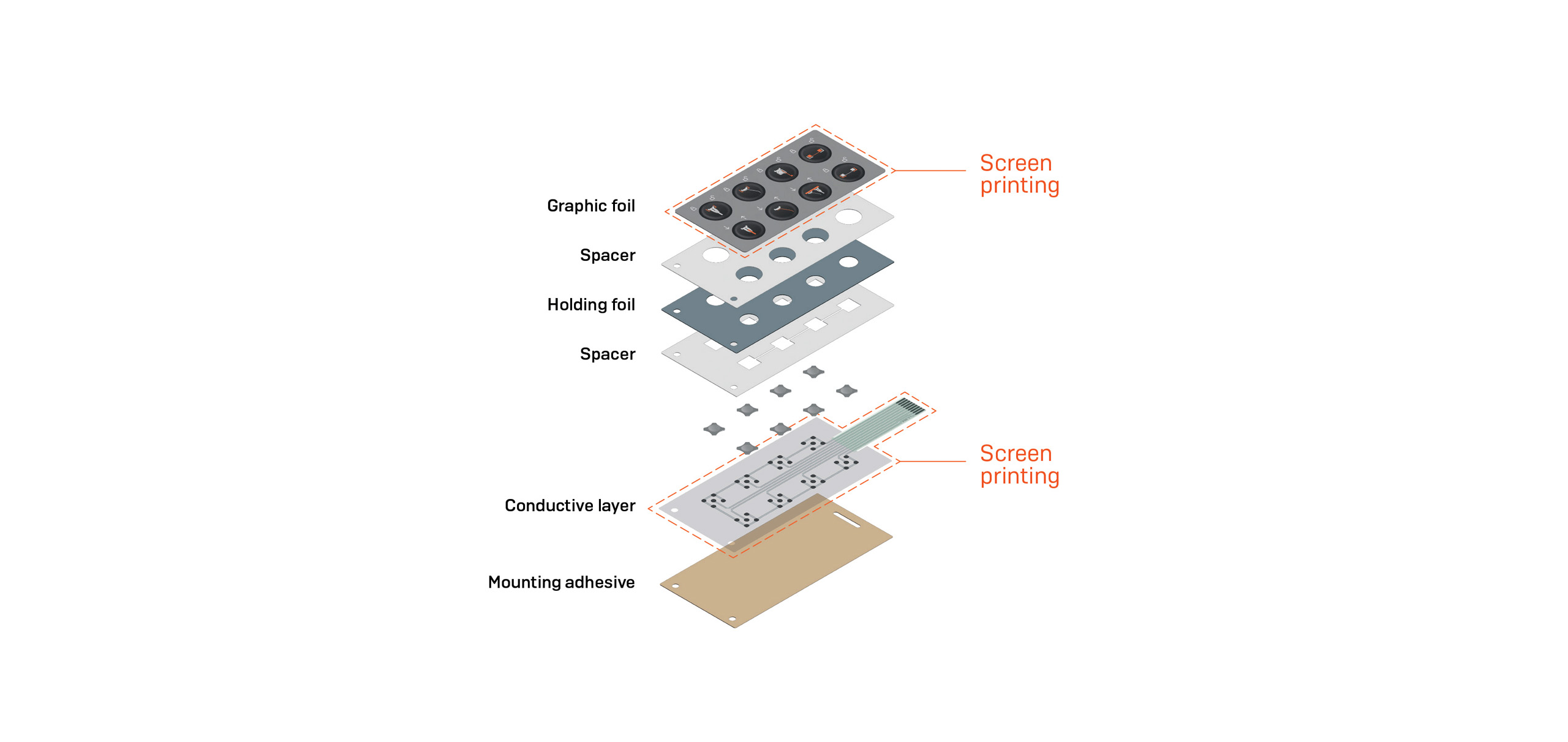
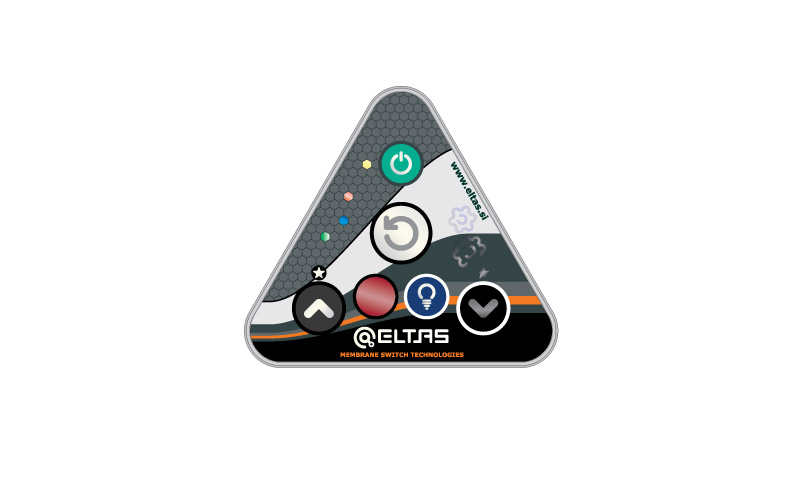
Picture 2: Construction of membrane
keyboard, the most industrially widespread
product involving a screen printed circuit.
Benefits for the Industry
Highly automated screen printing technology offers substantial benefits for the printed electronics
industry, especially in small-batch printing. Automating screen setup reduces production time,
increases productivity, and improves print quality. Furthermore, reduced energy consumption and
waste contribute to lower costs and a more sustainable manufacturing process.
These solutions are essential for meeting the demands of modern productions while maintaining a competitive edge in the printed electronics industry. With its advanced automated technology, INO is positioning itself as a leading provider of solutions that help companies achieve higher efficiency, greater flexibility, and sustainability in modern manufacturing.
These solutions are essential for meeting the demands of modern productions while maintaining a competitive edge in the printed electronics industry. With its advanced automated technology, INO is positioning itself as a leading provider of solutions that help companies achieve higher efficiency, greater flexibility, and sustainability in modern manufacturing.
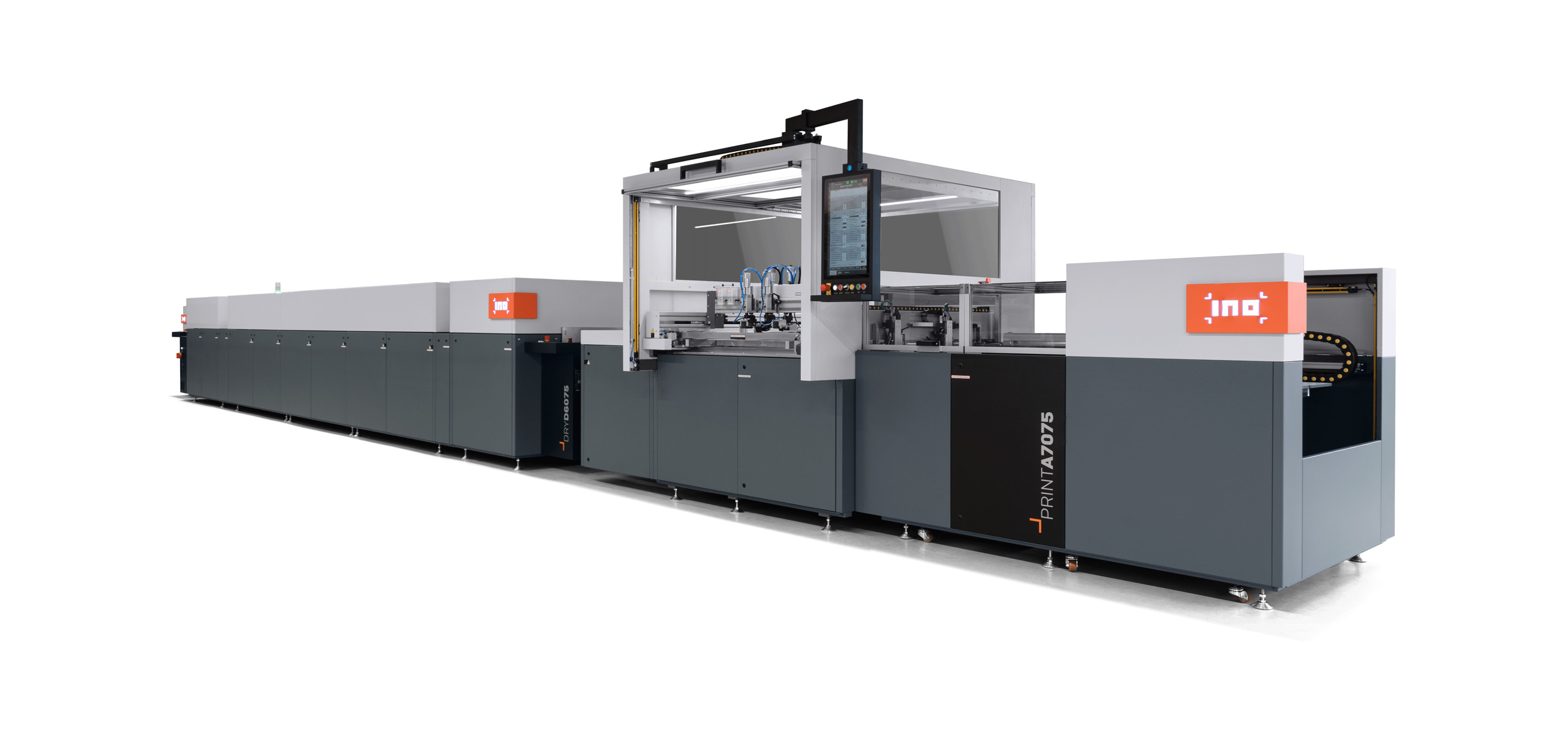
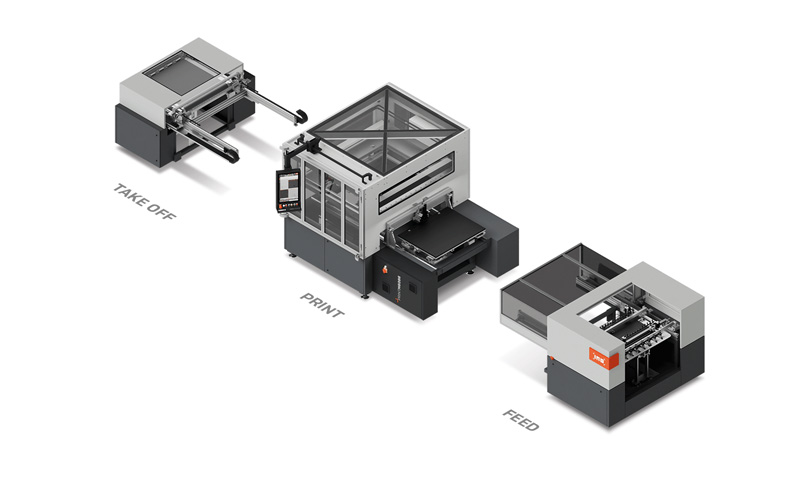
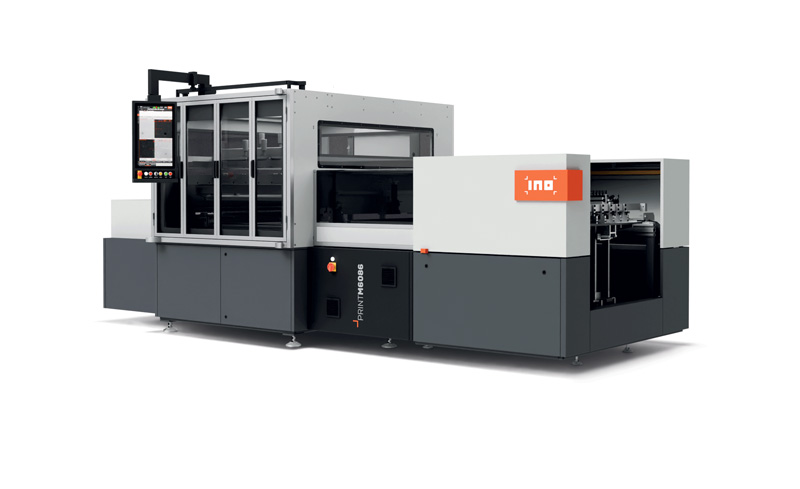
Picture 3: INO Line A7 – Highly automated screen printing technology offers significant advantages
for the printed electronics industry, particularly in small-batch printing.